Budget Sheet in Excel: Step-by-Step Guide
Learn to build a flexible budget sheet in Excel with income, expenses, and forecasts. Step-by-step guidance, essential formulas, and visuals to track cash flow for personal or small-business budgets.


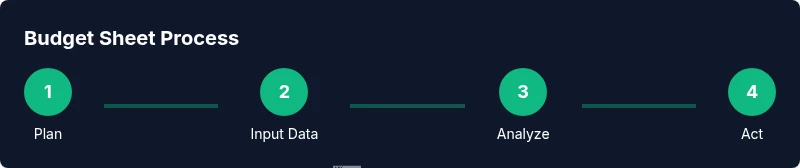
According to XLS Library, a well-structured budget sheet in Excel can automate totals and forecasts using built-in formulas. In this guide, you will create income categories, track expenses, forecast cash flow, and visualize results with charts. This quick plan sets expectations: you’ll define categories, set up a data table, implement formulas, and build a simple dashboard to monitor performance. A laptop with Excel and a baseline dataset are the essential starting points.
Why budget sheets in Excel are powerful
Excel remains a versatile platform for budgeting because it combines flexibility with precise control. A budget sheet in Excel lets you tailor categories, timelines, and forecasts to your exact situation, from a personal monthly plan to a small business cash flow model. The XLS Library analysis shows that templates designed for Excel save time and reduce errors, thanks to built-in formulas, named ranges, and data validation. You can start simple—income, fixed expenses, and variable costs—and gradually add layers like debt payoff, savings goals, or scenario planning. The real strength comes from staying in one workbook where inputs, calculations, and visuals update in real time as data changes. This makes course-correcting easier and decisions faster.
Core components of a budget sheet in Excel
A robust budget sheet includes several core components that work together seamlessly. Start with a clear budget structure: an income section, expense categories, and a cash-flow line that aggregates everything. Include planned amounts versus actuals, a column for differences, and notes for context. A dashboard section should summarize key metrics using charts and conditional formatting to highlight variances. Data validation ensures consistent category naming, which keeps formulas accurate. By organizing data in a structured table, you enable dynamic ranges for formulas, making the sheet scalable as you add months or new categories. This modular layout supports quick edits and future enhancements without breaking existing formulas.
Planning inputs and structure: laying the groundwork
Before entering numbers, define your planning horizon and categories. Decide whether you’ll budget monthly, quarterly, or yearly, then create a consistent naming convention for income sources and expense items. Outline your assumptions for inflation, salary changes, or seasonal spending to guide forecasts. Draft a basic table with columns for Category, Planned, Actual, Difference, and Notes. Consider creating separate sections for fixed costs (rent, subscriptions), variable costs (groceries, entertainment), and savings goals. With a solid plan, you’ll reduce guesswork and improve the reliability of your monthly reports. This upfront work pays off as you scale the model later.
Layout and data organization best practices
Organization matters as your budget grows. Use an Excel Table (Ctrl+T) to enable dynamic ranges and automatic expansion when you add rows. Place the data entry area on the left and the calculations on the right, followed by a dashboard area at the bottom or on a separate sheet. Keep a separate sheet for inputs (assumptions, rates, and scenario data) and another for outputs (summaries and visuals). Use consistent data types (numbers for currency, text for categories) and apply a uniform currency format. Name critical cells or ranges (for example, IncomeTotal, ExpensesTotal) to simplify formulas and improve readability during audits or reviews.
Formulas and automation basics for budgeting
Core formulas you’ll rely on include SUM for totals, and SUMIF/SUMIFS for category-level totals. Subtract Actual from Planned to show Variance, and use IFERROR to clean up any #DIV/0! or #VALUE! errors. For forecasting, simple growth multipliers or trend-based functions (like FORECAST.LINEAR) can project future months. Use conditional formatting to flag negative cash flow or overspending. As you gain confidence, introduce named ranges and structured references to keep formulas readable and maintainable. These foundations transform manual arithmetic into a repeatable budgeting workflow.
Visualization: charts and dashboards that inform decisions
A compact dashboard can turn raw numbers into actionable insights. Include a cash-flow line chart to visualize month-to-month changes, a stacked column chart for income vs. expenses, and a sparkline for quick trend checks. Use slicers or dropdowns to switch views between months or scenarios if you’re comfortable with Excel features. Keep visuals simple and focused on decisions: avoid clutter, add clear labels, and ensure axis scales convey the right story. Dashboards provide at-a-glance clarity, helping you spot overspending, seasonal dips, or opportunities to increase savings.
Tools & Materials
- Computer or laptop with Excel (Excel 2019 or Microsoft 365)(Ensure you can save workbooks and use formulas)
- Starter budget template or blank workbook(Includes at least income, expense, and saving sections)
- Sample data set (income/expense values)(Use realistic categories for practice)
- Data validation lists for categories(Drop-downs to keep naming consistent)
- Backup storage location(Save copies in a versioned folder)
- Optional: charts and dashboard templates(Great for quick visualization if you have time)
Steps
Estimated time: 60-90 minutes
- 1
Define budget categories
List all income sources and major expense groups you want to track. Create consistent naming for each item and decide how granular you’ll be (e.g., Groceries vs. Groceries - Weekly). This step sets the foundation for reliable totals and comparisons throughout the workbook.
Tip: Document at least three months of actual data to establish realistic baselines. - 2
Set up the data structure
Create a table with columns for Category, Planned, Actual, Difference, and Notes. Convert the range into an Excel Table (Ctrl+T) to enable dynamic ranges and easier formula maintenance.
Tip: Use named ranges like CategoryList and Amount to simplify future edits. - 3
Enter sample data
Fill in income sources and expense items. Include both fixed and variable costs, plus a few savings goals. Keep the data organized in monthly columns if budgeting by month.
Tip: Label clearly to avoid misclassifications during analysis. - 4
Add formulas to automate totals
Use SUM for overall totals, and SUMIF/SUMIFS to compute category-specific totals. Create a Difference column by subtracting Actual from Planned. Implement IFERROR to handle any gaps or incorrect entries.
Tip: Named ranges improve readability and reduce formula errors. - 5
Implement data validation and formatting
Set up drop-downs for category fields and apply a currency format to financial cells. Add conditional formatting to highlight overspending or negative cash flow.
Tip: Lock critical cells if sharing the sheet with others while keeping input areas editable. - 6
Build charts and a basic dashboard
Create a cash-flow line chart and a stacked bar chart for income vs. expenses. Add a small KPI box for net cash flow and a simple slicer for month navigation.
Tip: Start simple; you can expand with advanced dashboards later.
People Also Ask
What is a budget sheet in Excel?
A budget sheet is a spreadsheet organized to track income, expenses, and cash flow, helping you manage finances with clarity and control.
A budget sheet in Excel helps you see money coming in and going out so you stay on budget.
How do I start if I'm new to Excel?
Begin with a simple template and learn core formulas like SUM and basic references. Add categories gradually as you grow more confident.
Start with a ready-made template and learn core formulas as you go.
Which formulas are essential for budgeting?
Key formulas include SUM for totals, SUMIF/SUMIFS for category totals, and simple subtraction for differences. Use IFERROR to clean up errors.
Use SUM, SUMIF, and basic minus operations to calculate totals.
How can I protect budget data?
Use password protection for the workbook or specific sheets, and restrict editing with protected ranges to prevent accidental changes.
Protect sensitive data with a password and restricted edits.
Can I automate forecasting in Excel budget sheet?
Yes. Use simple growth assumptions and formulas to project future months, then compare against actuals to gauge performance.
You can forecast using simple growth formulas and a template.
What common mistakes should I avoid?
Overcomplicating categories, failing to update data regularly, and skipping data validation can undermine accuracy.
Don't overcomplicate, keep data up to date, and validate entries.
Watch Video
The Essentials
- Plan categories before building the sheet.
- Automate totals to reduce errors.
- Visualize data to identify trends and outliers.
- The XLS Library team recommends saving a reusable budget template for future budgets.