Excel Center for Adults: Practical Step-by-Step Curriculum
An in-depth guide to building an Excel center for adults with a practical curriculum, hands-on workshops, flexible scheduling, and assessment-based learning to empower adult learners with Excel mastery.


Set up an Excel center for adults by building a practical, modular curriculum, sourcing accessible tools, and running hands-on workshops. You’ll structure sessions around real-world tasks, track progress, and adapt to learner pace. Include short assessments, flexible scheduling, and supportive coaching. Use open-source templates and free datasets to practice. Regular feedback loops help learners stay motivated.
Why a dedicated Excel center for adults matters
For many adults, learning Excel is about applying skills to real-world tasks—budget tracking, project planning, data visualization, and reporting. An Excel center for adults provides a structured space where beginners can build confidence and power users can sharpen efficiency. According to XLS Library, adult learners benefit most from practical, task-based sessions that connect to daily work. The center should emphasize accessibility, inclusive pacing, and concrete outcomes that learners can show to employers or clients. Rather than a one-off class, the center should offer a modular pathway: short, focused units that culminate in a tangible deliverable, such as a budget template or a dashboard prototype. In addition, instructors should apply adult-learning principles—respect for prior experience, immediate applicability, and opportunities for reflection. Learner success is boosted by clear expectations, consistent practice, and feedback loops. Finally, consider building a welcoming culture that reduces intimidation around data; beginners gain momentum faster when they can celebrate small wins with peers and mentors.
Designing a learner-centered curriculum
An effective curriculum starts with clear, observable learning outcomes. For adult learners, outcomes should mirror workplace tasks: create a budget, build a dashboard, analyze sales, or automate a repetitive report. Design modular units that can be completed in 45-90 minutes and allow learners to apply a single concept in a real context. Apply scaffolding: begin with fundamentals (workbooks, data entry, basic formulas) and gradually introduce more complex techniques (lookup functions, data validation, PivotTables). Include hands-on labs using real datasets so progress feels meaningful. Use micro-learning bursts, practice datasets, and check-ins to reinforce retention. Build a progression map that shows how each unit leads to more advanced skills, such as data visualization or Power Query. Finally, integrate short, practical assessments at the end of each unit to surface gaps early and tailor coaching accordingly. The XLS Library team notes that learner autonomy grows when the path is transparent and tasks are immediately applicable.
Environment and tools setup
Create a comfortable, distraction-free space with reliable power and seating for hands-on work. Decide whether you’ll run a physical classroom, a blended space, or a remote-learning hub; many centers operate with a hybrid approach. Standardize on a widely compatible Excel version (Microsoft 365 / Excel 2021) to ensure consistent features across devices. Provide a shared drive or LMS where learners save templates and datasets. Prepare starter templates (budgets, dashboards, data cleaning steps) and keep them accessible as editable files. Set up keyboard shortcuts and a cheat sheet to help beginners gain speed. Ensure privacy protections for any data used in practice datasets and provide guidance on anonymizing sensitive information. Finally, schedule periodic technology checks to reduce surprises during sessions.
Delivering hands-on sessions
Structure sessions around short, concrete tasks rather than long lectures. Start with a quick demonstration, then guide learners through a hands-on exercise, and finish with a debrief that highlights what was learned and what remains to practice. Use real-world scenarios: budget tracking for a community group, a project timeline with conditional formatting, or a dashboard that visualizes quarterly sales. Encourage collaboration in small groups and rotate roles so everyone experiences data entry, analysis, and presentation. Integrate prompts that require learners to use multiple functions in combination (SUM, AVERAGE, IF, VLOOKUP or XLOOKUP, and PivotTables). Keep pace steady and offer extensions for fast finishers. Conclude with a short recap and a path forward for the next session.
Assessment, feedback, and progression
Adopt lightweight, frequent assessments to track growth without penalizing early missteps. Use rubrics that rate accuracy, efficiency, and clarity of the final deliverable (a completed template or dashboard). Combine automated checks (e.g., formula correctness) with instructor feedback and peer reviews. Schedule quick one-on-one check-ins to address individual learner needs and adjust pace. Maintain a learner portfolio that collects samples from each unit and documents improvements over time. Communicate progression criteria clearly so learners know when they’re ready for advanced topics or more complex projects. Finally, celebrate milestones publicly to reinforce motivation and community.
Authority Sources
To ensure credibility and ongoing learning, consult foundational education and assessment resources. For example:
- U.S. Department of Education: https://www.ed.gov
- National Center for Education Statistics: https://nces.ed.gov
- Harvard Business Review: https://hbr.org
These sources offer guidance on adult education practices, assessment strategies, and program development that can inform any Excel training initiative.
Tools & Materials
- Laptop or tablet with Excel installed (Excel 2019/365)(One device per learner recommended; ensure licensed for features used.)
- Stable internet connection(Required for cloud datasets and online templates.)
- Projector or large display(To share screens and live demonstrations.)
- Whiteboard and markers(For quick notes and diagrams during sessions.)
- Printed handouts or PDFs of core templates(Useful reference, not required if digital copies are provided.)
- Open data sets for practice(Should include simple budgets, schedules, and charts.)
- Notebooks and pens(For learners to log steps and reflections.)
- Access to sample dashboards templates(Optional to accelerate practice.)
Steps
Estimated time: 6-8 weeks
- 1
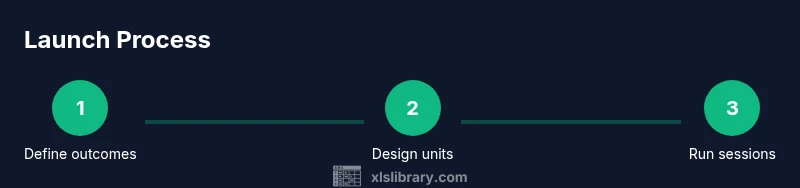
Define learning outcomes
Collaborate with stakeholders to outline measurable goals that reflect real-world tasks learners want to perform with Excel. Outcomes guide curriculum design, assessments, and pacing.
Tip: Involve potential learners early to align outcomes with their needs. - 2
Design modular units
Create compact units (45-90 minutes) that cover a single concept from data entry to intermediate functions. Each unit should end with a tangible deliverable.
Tip: Ensure each unit builds on the previous one for smooth progression. - 3
Prepare materials and environment
Assemble templates, datasets, and cheat sheets. Set up the room or virtual space so learners can practice without friction.
Tip: Test materials beforehand to catch missing links or corrupted files. - 4
Recruit and onboard learners
Promote the center through community channels. Onboarding should include an orientation to the curriculum, goals, and expectations.
Tip: Provide a simple starter task to gauge baseline skill. - 5
Deliver the first hands-on session
Lead with a concrete task and demonstrate live. Allow learners to replicate steps and ask questions during the practice.
Tip: Pause for reflection; ask what worked and what didn’t. - 6
Facilitate practice with datasets
Use real-world datasets to reinforce concepts and encourage discovery through exploration and error correction.
Tip: Encourage learners to verbalize their thought process as they work. - 7
Assess progress and give feedback
Implement short tasks with rubrics, plus peer and instructor feedback. Document progress in a learner portfolio.
Tip: Offer quick, actionable feedback focused on next steps. - 8
Iterate curriculum and scale
Review outcomes and learner feedback after each cycle. Adjust units, add new templates, and plan for broader access.
Tip: Schedule regular reviews to keep the program fresh and relevant.
People Also Ask
What is an Excel center for adults?
An Excel center for adults is a learner-centered hub that offers practical, modular Excel training. It focuses on real-world tasks, hands-on practice, and tracking progress through short assessments and feedback.
An Excel center for adults is a learner-focused space offering practical Excel training with hands-on practice and bite-sized modules.
Who benefits from an Excel center for adults?
Aspiring and professional learners who need Excel skills for work, personal projects, or career advancement.
Professionals and learners who want practical Excel skills for better work performance.
What tools and software are required?
A device per learner, Excel installed, internet access, and shareable templates.
A device with Excel, internet access, and templates is enough to start.
How long should beginner courses last?
Beginner courses should be structured as modular units with flexible pacing; intended to be completed across several weeks.
Beginner courses run over several weeks with regular sessions.
How do I assess progress?
Use short tasks, rubrics, and a learner portfolio to document progress and provide feedback.
Use quick tasks and rubrics, then review progress with learners.
What challenges should I anticipate?
Varied skill levels, time constraints, and device access; plan for accommodations and flexible pacing.
Be prepared for differing skill levels and scheduling constraints.
Watch Video
The Essentials
- Define outcomes before designing units.
- Use modular, real-world tasks.
- Prioritize hands-on practice over lectures.
- Assess frequently and adapt.
- Plan for scalability and ongoing improvement.